
نزدیکا
Menchu Castañeto SiringSocial
3.877.00 Reviews
- Version
- 1.0.0
- Installs
- 500.00K
- Age Rating
- Mature 17+
Screenshots
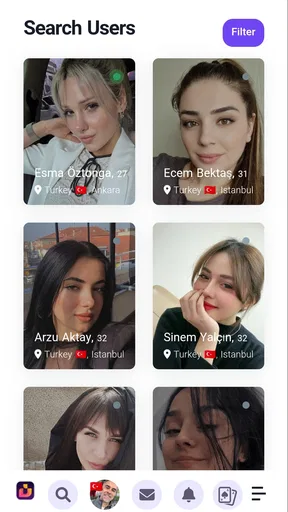


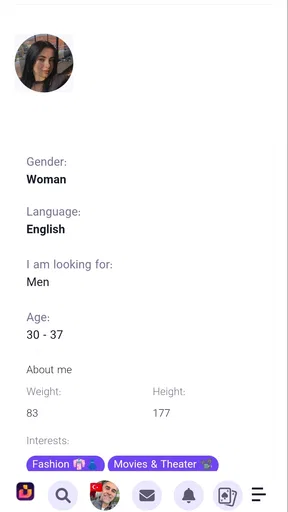
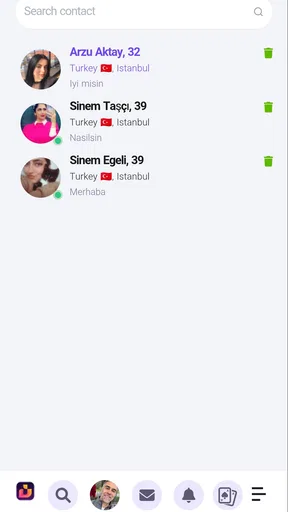
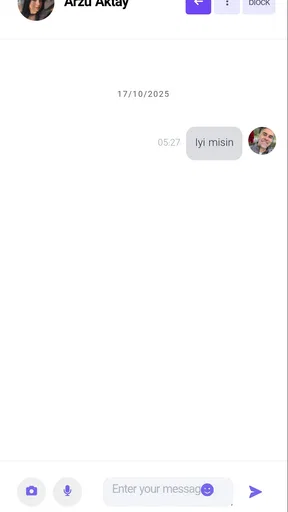
Our Review of نزدیکا
 Analysis by Appyee
Trying a new social app usually starts with a simple question: can I use it comfortably without giving up more control than I expected? That was the question I kept in mind with نزدیکا, a free social app developed by Menchu Castañeto Siring. Its store summary focuses on registering and signing in to the newer version, so the first impression is very much about access rather than a long list of promised features. That can be useful for someone who wants a straightforward starting point, but it also means the quality of the experience depends heavily on what appears after creating an account.
The app is aimed at mature users, carrying a 17+ content rating, and it has reached over 500 thousand installs. I would not treat that reach as proof that the service is automatically trustworthy; it simply tells me that enough people have been willing to try it. The average score is around 3.8 from roughly 2 thousand ratings, with dozens of written reviews, which suggests a mixed but meaningful public reaction. In my experience, that kind of score is a reason to explore carefully rather than dismiss the app or recommend it blindly.
What using نزدیکا feels like at the starting line
The first practical task is registration and sign-in. Because the store description places those actions at the center, I approached the opening screens as a checkpoint rather than rushing through them. I would read every field before submitting it, note which details are required, and avoid adding personal information simply to make a profile look complete. That habit matters more in a social service than in a basic utility because profile details can become part of how strangers identify or contact you.
The app currently appears as version 1.0.0 and supports devices running Android 7.0 or later. That broad compatibility is helpful if you use an older phone, although an older operating system can make general security maintenance more important. I would keep the phone updated where possible and install the app only from the official application marketplace. The developer name shown for the app is Menchu Castañeto Siring, so I would also check that the publisher matches before installing an update or a similarly named alternative.
My main advice during setup is to slow down at the points where the app asks for identity, contact, or account information. A social profile is easier to manage when it starts with the minimum needed to function. If you later decide that the service is useful, you can add more context deliberately. Reversing an overshared first impression is usually harder than building a modest profile gradually.
Why the age label deserves attention
The mature rating is not a decorative detail. It tells me that this is not an app I would casually hand to a teenager or install on a shared family device without checking who can open it. It also changes how I would approach conversations, profile discovery, and any material that appears inside the service. Adults who are comfortable with a mature social environment may find the rating appropriate, while anyone seeking a general-audience community should choose a different kind of platform.
For parents, the practical takeaway is simple: do not rely on the icon or a short description to judge suitability. Check the device’s account controls, review who can access the app, and talk with younger users about not sharing phone numbers, addresses, school details, or live location with people they have only met online. Those precautions are useful regardless of the app, but the 17+ label makes them especially relevant here.
Trust starts with visible choices, not popularity
I prefer to judge a social app through the choices it visibly gives me. Can I understand what I am submitting? Can I leave a screen without accidentally publishing something? Can I recognize whether I am editing my own account or interacting with another person? These small moments affect trust more than an attractive welcome screen. With نزدیکا, I would pay close attention to the wording around registration and sign-in, because those are the actions highlighted before anything else.
I also would not confuse a large install count with strong privacy protection. Popularity can mean that an app is easy to discover, but it does not answer questions about data handling, account recovery, or how much control a user has after joining. When I review a social app, I want the user to make those decisions consciously rather than assuming that a familiar-looking flow is harmless.
Account control is the part I would test first
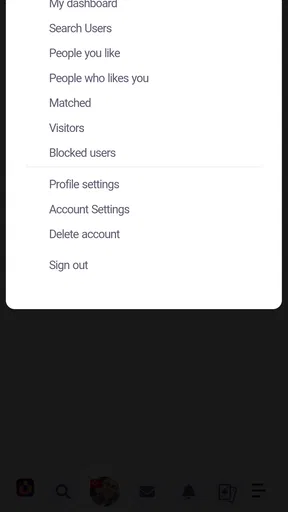
Before spending time building a network, I would look for the account area and identify the available controls. The useful questions are practical: can I change basic profile details, sign out cleanly, manage notifications, and find a route for dealing with an unwanted interaction? I would also note whether the app makes these controls easy to locate or hides them behind several layers. A service can feel friendly during registration and still become frustrating when a user wants to reduce visibility or leave.
One workflow I recommend is to create the account with a short, neutral profile, explore the settings, and then decide whether the app deserves more personal information. This is more revealing than judging the service from its welcome screen. If the controls are understandable, I feel more comfortable continuing. If I have to guess what a setting means, I stop and investigate before using the app socially.
Another useful test is to sign out and return later without changing anything important. That checks whether the login path feels predictable and whether you understand which credentials or account details you need. I would not repeatedly create accounts just to experiment, but one careful review of the sign-in process can prevent avoidable confusion later.
Data-sensitive moments deserve a pause
Social apps become sensitive when a user moves from browsing to identifying themselves. A name, photograph, contact detail, location reference, or personal routine can make an account easier for friends to recognize, but it can also make the user easier for strangers to target. I would treat every profile field as optional until the app clearly requires it and I understand why it is needed.
The same caution applies when communicating with another person. I would keep early conversations inside the app instead of quickly moving to a personal phone number or another private account. If someone pressures me to share information, sends suspicious requests, or tries to create urgency, I would stop engaging and look for the app’s available reporting or blocking controls. A social platform is only as safe as the boundaries its users maintain.
Photos need similar care. Before uploading one, I would check the background for house numbers, work badges, school uniforms, documents, or recognizable daily routes. This is a non-obvious risk because the image may look harmless while revealing more than the caption. I would also avoid posting a real-time location when I am still there, especially if the profile is visible beyond a small circle of people I know personally.
A realistic everyday use case
Imagine that I want to reconnect with people nearby after moving to a new area. I could begin with a limited profile, sign in, and observe how the service presents people and conversations before sharing my routine. I would use a neutral photo, avoid listing my exact workplace or home area, and keep the first exchanges focused on common interests. If the app makes it easy to understand who can see my profile and how to stop an unwanted conversation, it becomes more practical for this situation.
What I would not do is treat the first friendly interaction as proof of identity. I would not arrange a private meeting immediately, send money, share account codes, or provide documents. If I eventually met someone from the app, I would choose a public place and tell a trusted person where I was going. These steps may sound obvious, but social applications often turn ordinary curiosity into quick personal disclosure.
How it compares with familiar social alternatives
Compared with a large mainstream social network, نزدیکا may appeal to someone who wants a more focused entry point rather than a service built around a broad ecosystem of pages, media, groups, and commercial content. The trade-off is that a smaller or more specialized experience can feel less predictable: the value depends on who is active and how clearly the app communicates its controls. I would choose a mainstream network when I need established contact tools, familiar moderation workflows, or a community I already know.
Compared with a messaging app, this is not the tool I would choose simply to keep in touch with close friends. Messaging services are usually better for conversations with people whose identities I already know. A social discovery app makes more sense when I am willing to encounter unfamiliar users, but that also calls for stronger boundaries and more careful decisions about what becomes public.
Compared with a dating-focused service, I would avoid assuming that every interaction here has the same purpose. The mature rating does not by itself explain the nature of each conversation, so I would communicate clearly and avoid reading intentions into a profile. If I specifically wanted matching filters, relationship preferences, or a community built around dating, a dedicated service would probably be easier to understand.
Three habits that make the experience safer and calmer
- Use a staged profile: begin with only the information needed to participate, then add details only after you understand visibility and account controls.
- Separate discovery from trust: treat a profile, photo, or friendly message as an introduction, not verification of who someone is.
- Review before sharing: inspect photos, captions, and location references for details that expose your home, workplace, schedule, or other people.
I would add a fourth habit: keep a personal record of the account details needed for recovery, but never store passwords or sign-in codes in a public note or send them to another user. If the app offers account-management options, I would learn where they are before I need them. That small preparation reduces panic if I later lose access or decide to stop using the service.
Who should try it, and who should skip it
I can see نزدیکا working for an adult who wants to explore a social space with an uncomplicated registration focus and is comfortable taking responsibility for privacy decisions. It may also suit someone with an older Android phone, since the stated minimum is Android 7.0. The free price removes the need to commit money before trying the basic experience, which makes a cautious test reasonable.
I would skip it if I want a clearly defined professional network, a private family messenger, or a tightly controlled environment for younger users. I would also avoid it if I am unwilling to inspect settings, moderate incoming interactions, and limit the personal information I share. Social discovery is not passive; the user has to participate in protecting the account.
The mixed average rating reinforces that cautious approach. Around 3.8 is not a warning to avoid the app automatically, but it is also not a reason to assume that every user will have a smooth experience. I would read recent user comments in the marketplace, look for recurring complaints about access or account handling, and then decide whether the app’s actual behavior matches my needs.
My cautious verdict
After looking at نزدیکا through the lens of trust, I see a free social app that is worth a careful trial for adults, not an app I would recommend using on autopilot. Its straightforward registration emphasis, broad device support, and substantial install base make it easy to consider. The mature rating and the nature of social interaction make personal boundaries essential from the first sign-in.
The best way to approach it is slowly: create a restrained profile, inspect every visible control, and share trust only after it has been earned. I would keep sensitive details private, avoid moving conversations elsewhere too quickly, and leave if the account experience becomes unclear or uncomfortable. For users who want that level of caution, نزدیکا can be a reasonable social experiment. For anyone seeking guaranteed privacy, a private communication tool, or a clearly specialized community, another option will likely be the better fit.
At its current version, the app feels like something to evaluate through personal control rather than promises. Menchu Castañeto Siring has made a service that adults can try without paying, but the responsible choice is to treat the first session as an inspection. If the controls and interactions feel understandable, continue gradually. If they do not, there is no good reason to force a social connection that already makes you uneasy.
Verdict
Strengths of نزدیکا
- Helps discover nearby shops, services, and local businesses quickly.
- Location-based results make searches more relevant to your surroundings.
- Useful for finding lesser-known businesses outside major commercial areas.
- Can save time compared with searching through general web results.
- Convenient for users who prefer exploring services close to home.
Limitations of نزدیکا
- Results may be limited in smaller towns or less-covered regions.
- Location access may be required for the app’s main features.
- Business information can become outdated if listings are not maintained.
- Search quality may vary depending on the number of local listings.
- Some features may depend on internet connectivity and accurate GPS data.
Similar Picks in This Category
View All
Meta Platforms, Inc.4.6

Instagram4.0

Likee-Live, Chat & Party Games
Likeme Pte. Ltd.4.4

Facebook Lite
Meta Platforms, Inc.4.5

TikTok - Videos, Shop & LIVE
TikTok Pte. Ltd.4.0

Moj: Free Short Drama & Reels
ShareChat4.1
Frequently Asked Questions
What is نزدیکا and what can I use it for?
نزدیکا is a location-based social and discovery application designed to help users find nearby people, places, activities, or local content, depending on the features available in their version. After installing it, users can typically explore what is happening around them, interact with nearby communities, and discover useful local information. The exact experience may vary by region, language, and the permissions enabled on your device.
Does نزدیکا require access to my location?
Location access is generally important for نزدیکا because nearby recommendations and local interactions depend on knowing your approximate position. You can usually choose whether to grant access while using the app, allow it continuously, or deny it completely. If you refuse permission, some discovery features may not work correctly. Review the app’s privacy settings and your phone’s permission controls before enabling background location access.
Is نزدیکا free to download and use?
نزدیکا can generally be downloaded without an upfront charge, but availability of free features may depend on the platform and the current version of the app. Some services may include advertising, optional purchases, subscriptions, or paid promotional tools. Before confirming any transaction, check the store listing and in-app payment screen carefully, especially if the application is used by children or on a shared device.
Do I need to create an account to use نزدیکا?
The account requirements may depend on which parts of نزدیکا you want to use. Basic browsing or viewing local content may be available with limited access, while posting, messaging, saving information, or joining community features may require registration. If you create an account, use a strong password and provide only the personal details necessary. Also review profile visibility and communication settings before interacting with other users.
Is نزدیکا safe and available on both Android and iPhone?
Before downloading نزدیکا, confirm that you are using the official Google Play Store or Apple App Store listing, since unofficial files can contain security risks. Safety also depends on how you share your location and communicate with other users, so avoid publishing sensitive information and report suspicious behavior. Compatibility, language support, and feature availability can differ between Android and iOS and may also vary by country.
